
Sitecore Symposium 2026 Highlights


Sitecore Symposium 2026 was back in Orlando at the Walt Disney World Resort. The theme this year was Marketing Rewired, and almost every keynote came back to the same question: when someone asks ChatGPT or Gemini about your brand, what does it say, and does it pick you?

MarketingIQ
The big announcement this year was MarketingIQ, part of SitecoreAI. It connects market insights, brand intelligence and AI agent orchestration. It generates campaign briefs, drafts and components, while keeping marketers in control of review, approval and publishing.

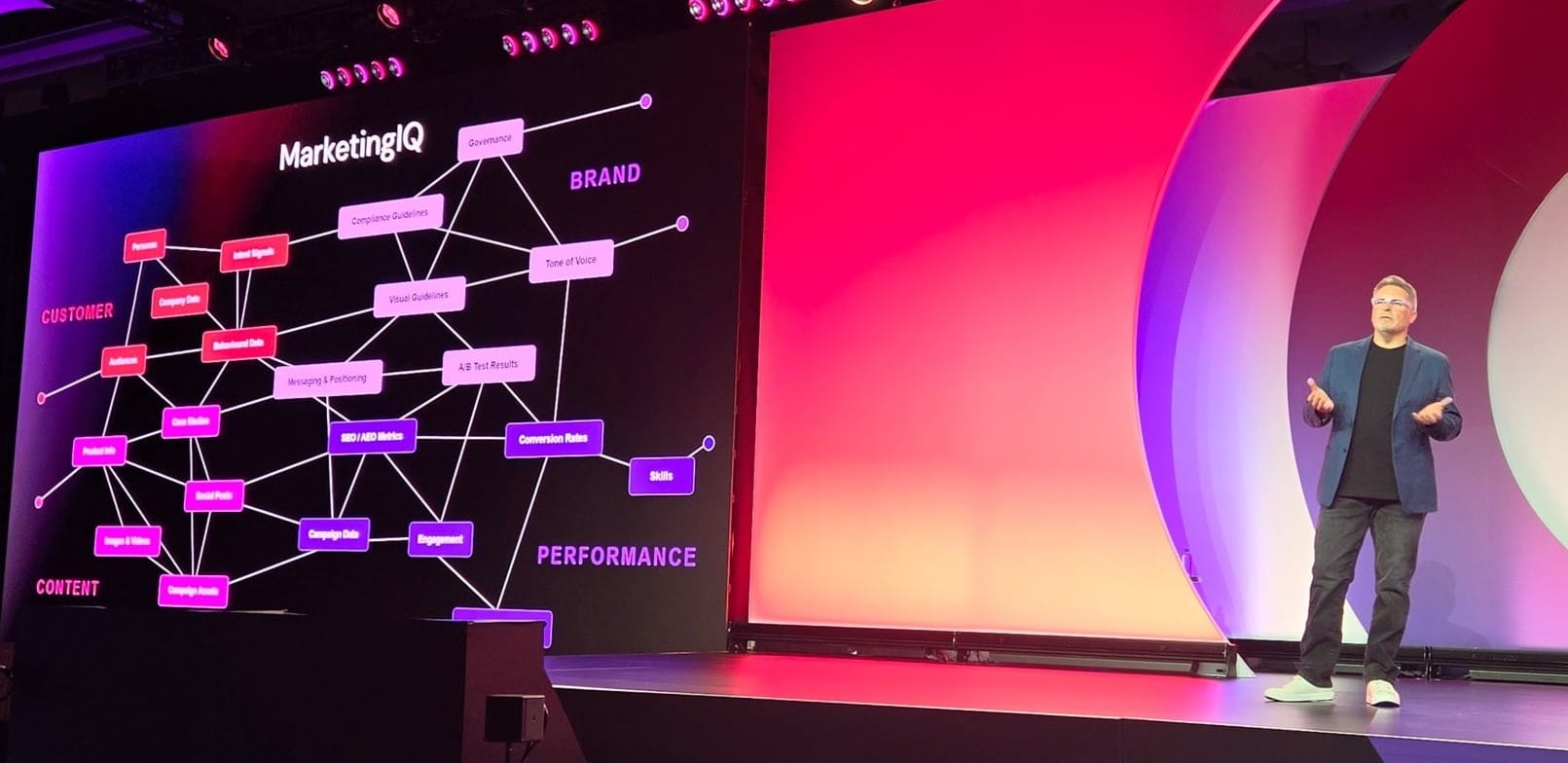
On stage they showed the context MarketingIQ works from, in four groups:
- Customer (personas, intent signals, company data, behavioural data, audiences),
- Brand (governance, compliance guidelines, tone of voice, visual guidelines, messaging and positioning),
- Content (product info, case studies, social posts, images and videos, campaign assets)
- Performance (A/B test results, SEO/AEO metrics, conversion rates, campaign data, engagement).
ChatGPT leaves your brand out of an answer, or quotes an old price. Scrunch catches it, MarketingIQ pulls your approved product info, drafts a fix and stages it. Someone on your team approves it, it goes out, and you can measure whether visibility, traffic and conversions actually moved. It doesn't need everything to live in Sitecore. It works with other CMS, DAM and CRM tools too.
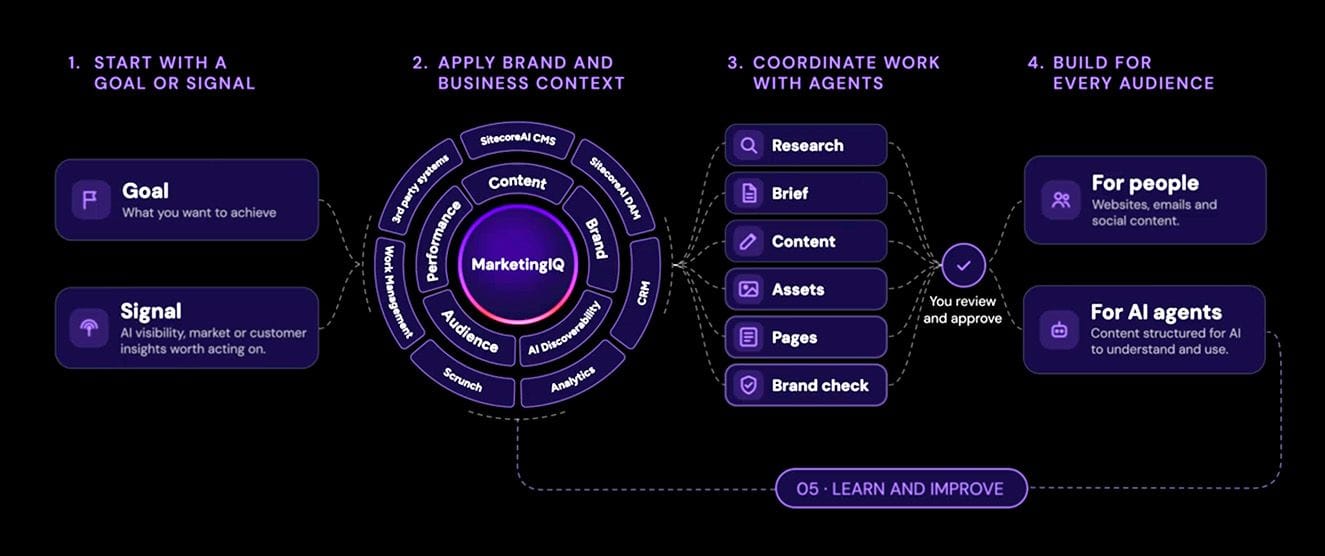
It works as a loop:
- Start with a goal or signal: something you want to achieve, or an AI visibility, market or customer insight worth acting on.
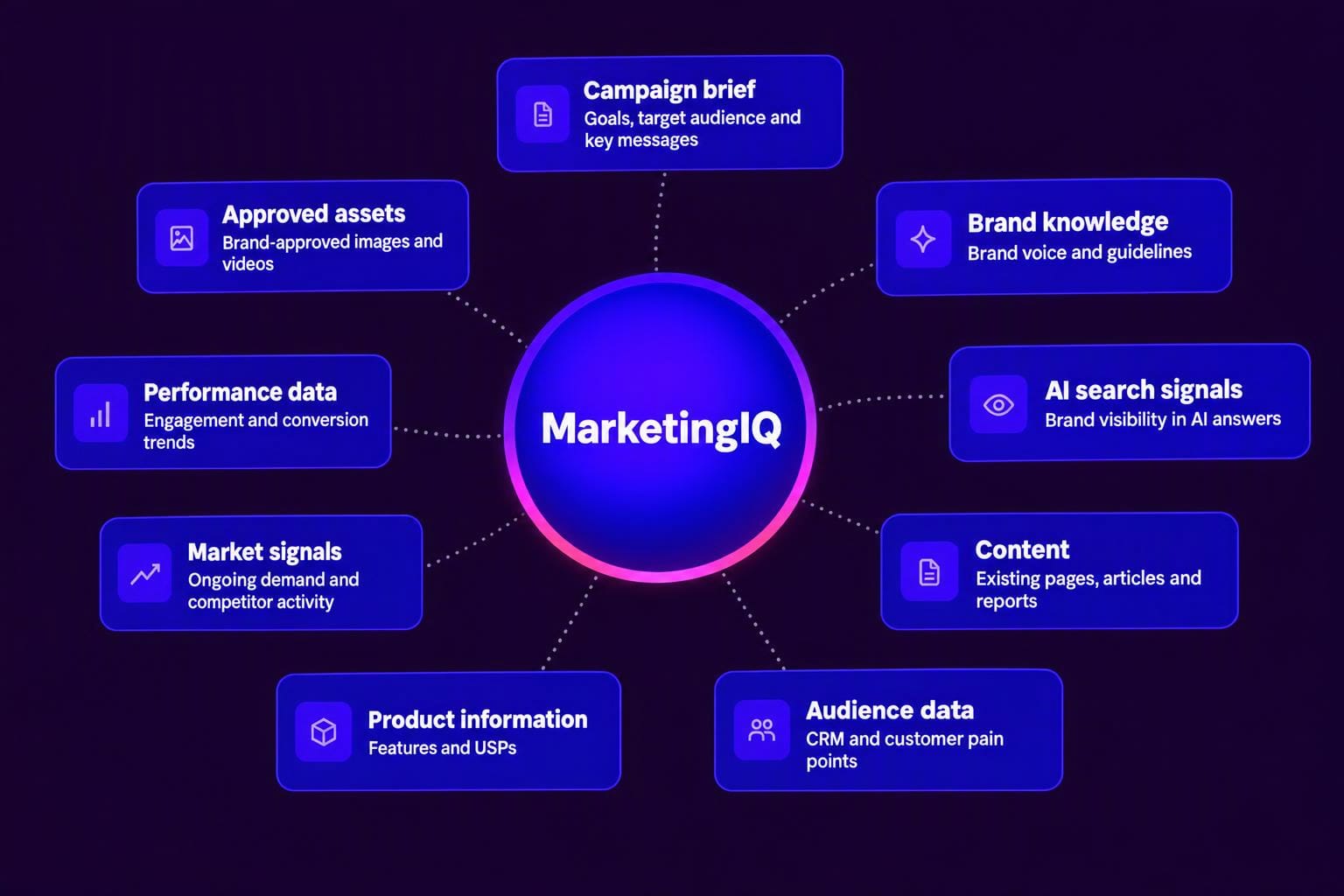
- Apply brand and business context: brand knowledge, product information, approved assets, audience data and performance data.
- Coordinate work with agents: research, brief, content, assets, pages and brand check, with you reviewing and approving.
- Build for every audience: websites, emails and social content for people, and structured content for AI agents.
- Learn and improve: results feed the next round.
MarketingIQ is well integrated in SitecoreAI, or in XM/XP with a contract for SitecoreAI.
Andy Cohen
Andy Cohen joined CEO Eric Stine for a fireside chat on capturing attention and keeping audiences engaged.

Scrunch
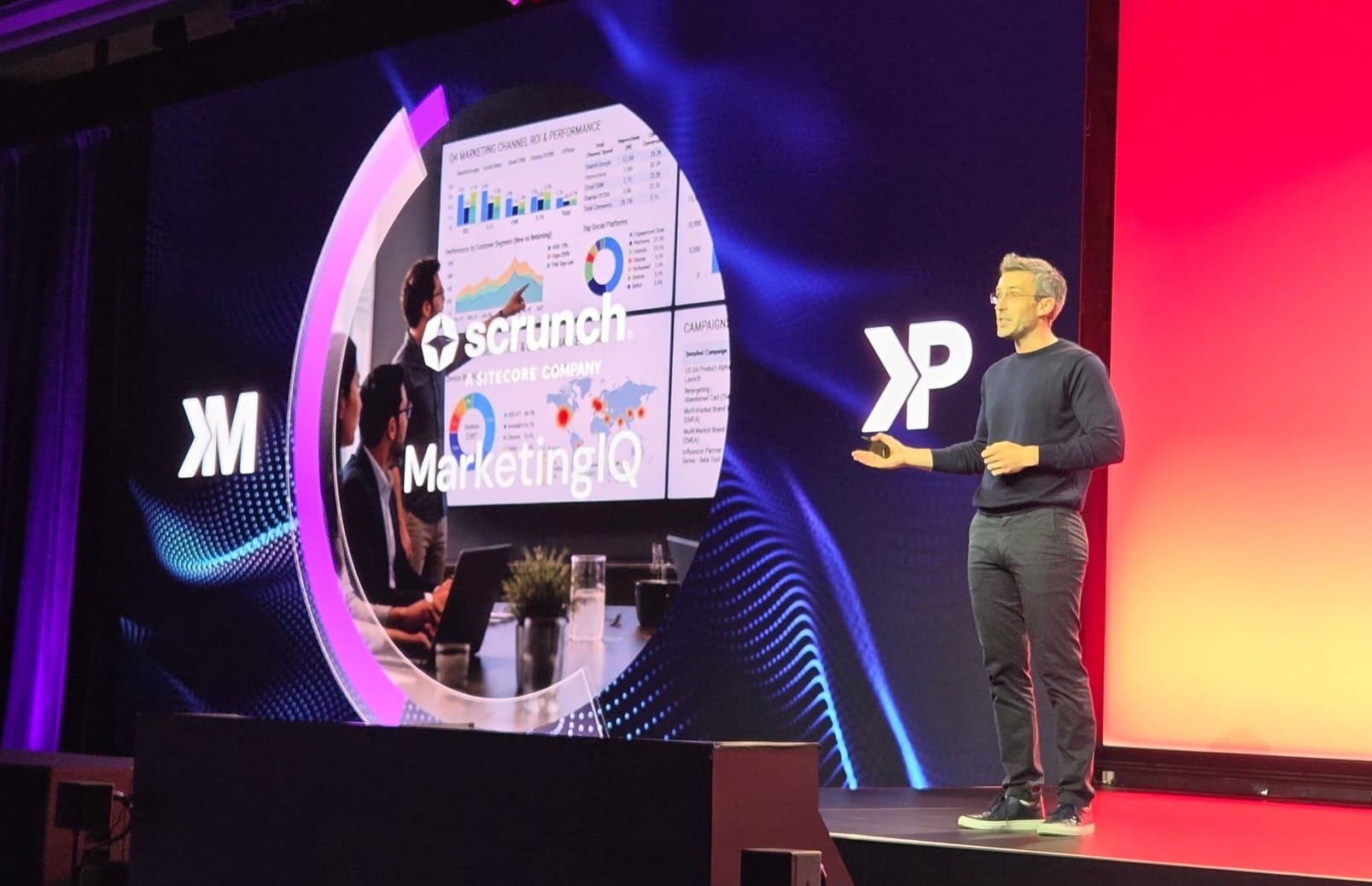
Sitecore acquired Scrunch in June. It's an AI search visibility platform that tracks brand presence across AI search engines like ChatGPT, Gemini and Perplexity, and it now brings AI discoverability into the MarketingIQ loop.
On day two, Scrunch launched Citation Optimization. AI answers lean heavily on third-party sources like review sites, publishers and industry lists. This shows which of those sources shape the answers for the prompts you track, ranks them by influence and how realistic it is to get on them, and helps with outreach.

Two stats from their research stood out:
- Impostor sites: 17% of Fortune 500 companies had an impostor website cited in AI answers, and in three out of four of those answers the AI treated the fake as the official site. Scrunch released Imposter Detection to flag these and start takedowns.
- AI is a closed loop: over 40% of AI sessions never touch the open web, compared with 21.5% for regular search. No search before, no click after.
Tim Sanders keynote: who gets found, who gets chosen
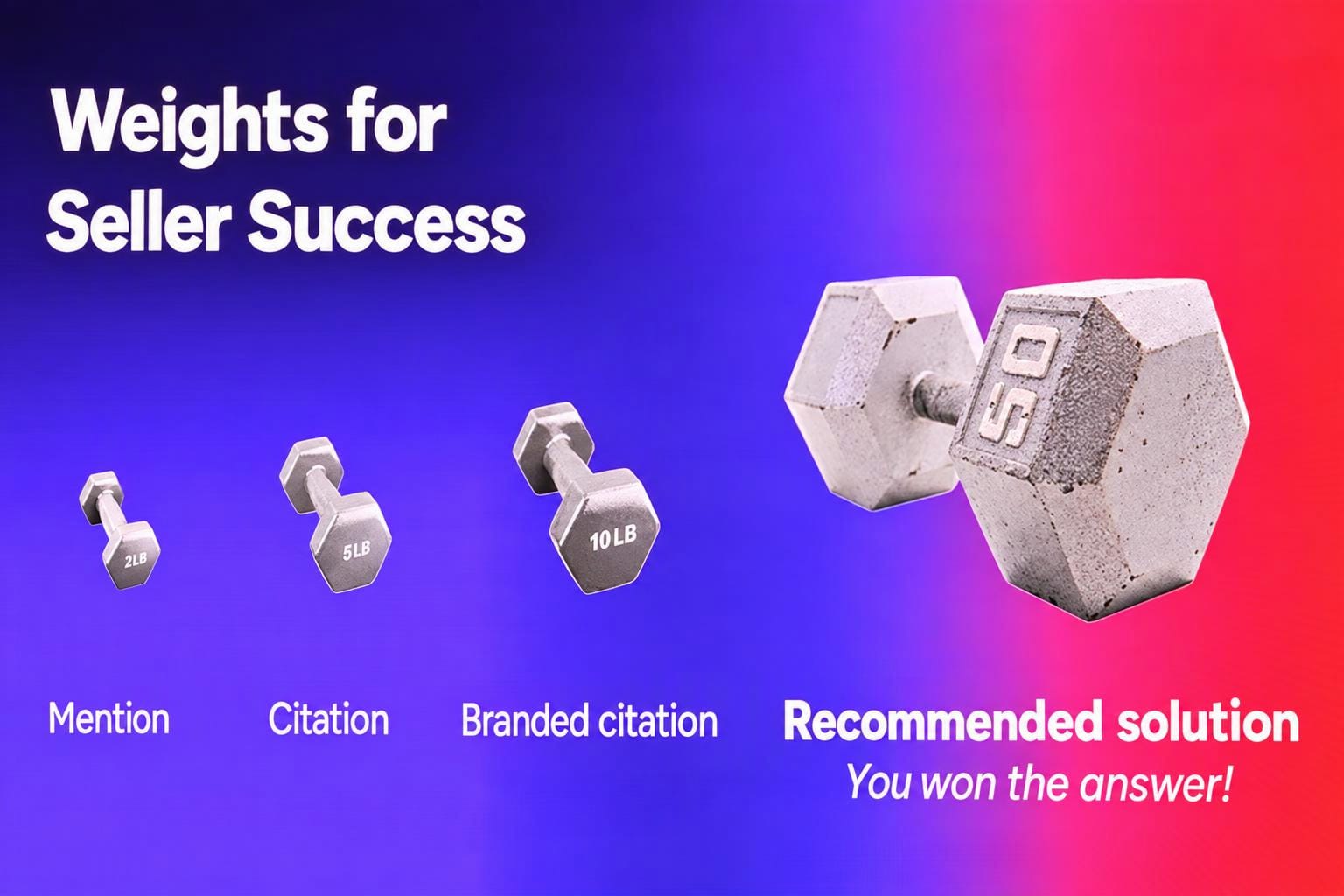
Tim Sanders, Chief Innovation Officer at G2, gave my favorite keynote this year. Getting mentioned by AI isn't the win. There's a ladder: mention, citation, branded citation and then recommended solution. Only the last one means you won the answer.

He also showed the weights of seller success three main areas
- Mention
- Citation
- Branded Citation
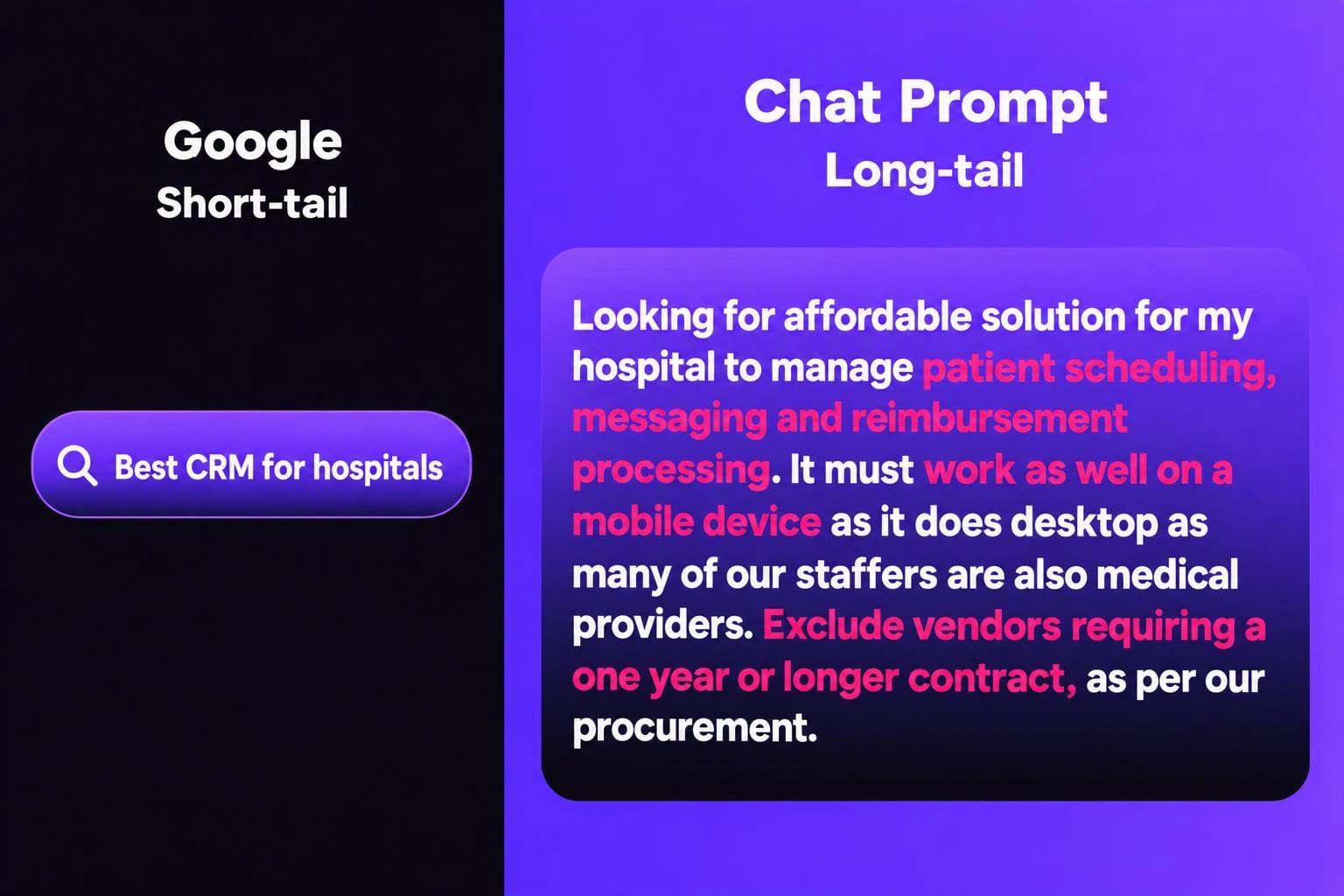
He also showed how search has changed. On Google it's "best CRM for hospitals." In a chat prompt it's a full paragraph: affordable, handles scheduling and reimbursement, works on mobile, no contracts longer than a year. Our content has to hold up to that.
Our content must help AI understand not only who we are, but when and why we are the right answer. Good architecture helps authoritative content become understandable and usable beyond the webpage.
Make content accessible to machines: crawlability, rendering and technical access matter.
Build meaning into the architecture: semantic HTML, structured data and metadata provide context.
Design reusable components intentionally: components should keep content hierarchy and meaning across experiences.
Prepare for new consumers of content: websites now serve people, search engines, AI platforms and agents.
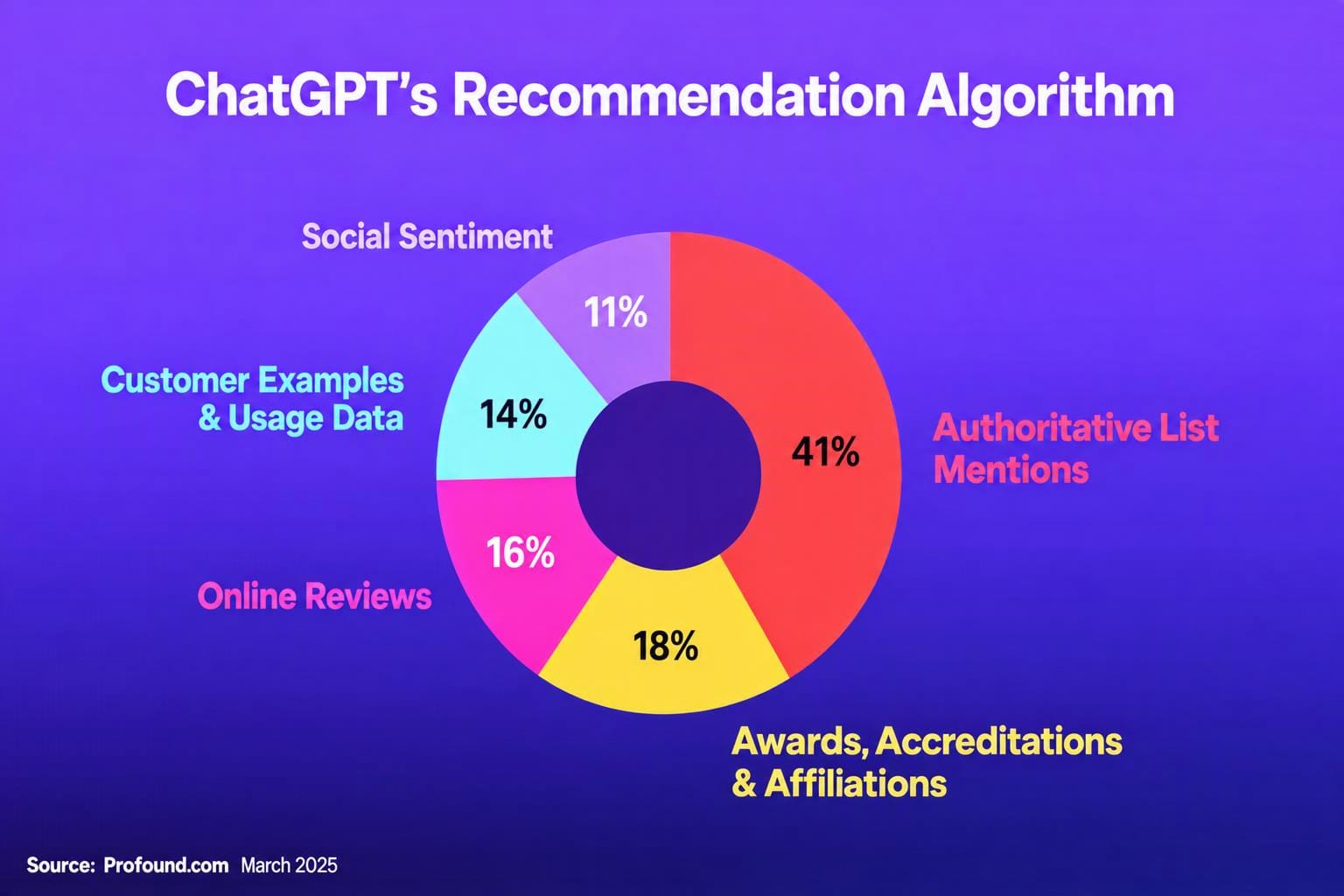
He also shared what drives ChatGPT's recommendations. Authoritative list mentions carry the most weight.
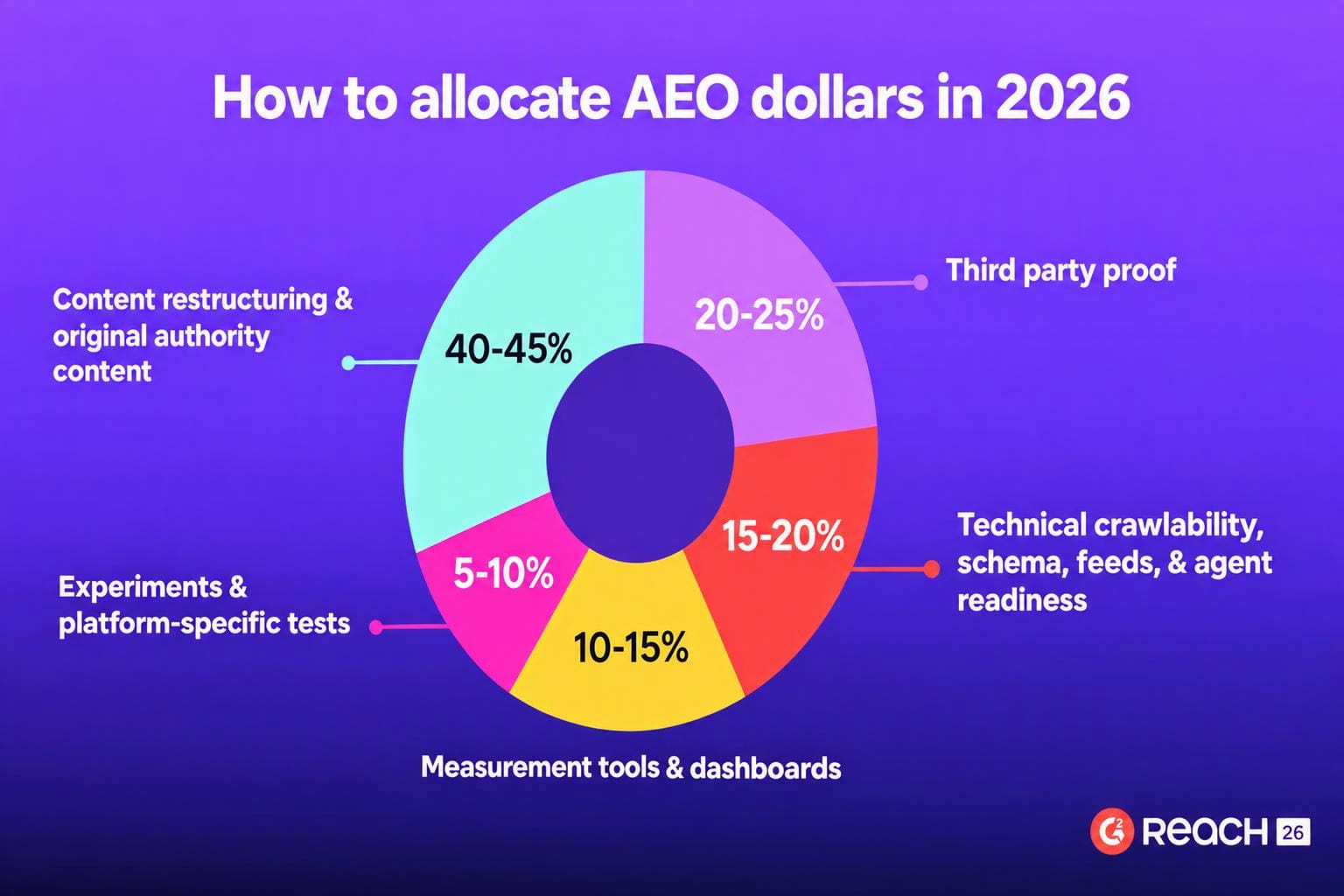
His suggested split for AEO spend in 2026: 40–45% on content restructuring and original authority content, 20–25% on third-party proof, 15–20% on technical crawlability, schema, feeds and agent readiness, 10–15% on measurement tools and dashboards, and 5–10% on experiments and platform-specific tests.
He closed on language. How we talk about AI shapes whether people see it as a threat or an opportunity:
- Integration, not adoption: AI becomes part of the way we work.
- Capacity, not cost cutting: AI gives people more ability to do valuable work.
- Opportunity, not displacement: focus on what AI now makes possible.
AI Themes
The same themes kept coming up across the sessions.
For customer success: rethink measurement
Traffic alone is no longer enough. Teams need KPIs that reflect real impact and conversion quality. Start with a baseline, track outcomes and measure what drives value. Last touch is going to be 90% of conversions.
For internal success: integrate, increase, innovate
AI should increase capacity, not just get layered onto existing processes. Be clear about when to use AI and when human judgment is needed. Research both the successes and the failures.
For both: organization and governance
The challenge is not a lack of content, but a lack of organization and governance. Atomic content, semantic markup and clean structure unlock reuse, scale and better site management. Avoid complex JS and heavy, confusing markup.
Digital Factory
The goal is to support diverse brands and content across a single ecosystem and get new sites to market faster. The way to get there is to standardize components and patterns, share governance, reduce risk and improve the author experience.
-
Boston Beer: The goal isn't one experience across every brand. It's one foundation that makes every brand easier to evolve.
-
G4S: One component library, many digital experiences, with sites provisioned quickly and design systems governed properly.
-
Raymond James:Designed for people, structured for machines, governed for trust.